
142,579 Franchise Operators, Built From Filings Nobody Reads
The list vendors charge real money for, assembled free from public records — plus the honest coverage ceiling.

As of June 2026 · Build log
There is no public list of who owns the franchises in America. Ask "who owns the three McDonald's near me," or "find me every multi-unit Wendy's operator in Texas," and you hit a wall. The big data vendors — FRANdata, FranChimp — sell a version of that list. Everyone else does without.
But the raw material is public, and it's free. Per the FTC's Franchise Rule, every franchise brand has to file a disclosure document with state regulators before it can sell a franchise. Buried in that document, Item 20, is a roster: the brand's franchisees, by name, city, and phone. One filing covers one brand's entire national footprint. The list nobody sells is sitting in paperwork nobody reads.
So I read it. All of it. The result is 142,579 multi-unit franchise operators — the people who own more than one location — built from public filings for about zero dollars. Here's how, and exactly what's in it.
What is a multi-unit franchisee, and how many are there?
A multi-unit franchisee is one operator that owns several franchised locations — sometimes five, sometimes five hundred. They're the real buyers in franchising: the operators with capital, staff, and the appetite to add units. I could name 142,579 of them in the US from public filings alone.
Counting them is harder than it sounds, because one operator hides behind many companies. A single Burger King franchisee files each restaurant under its own LLC, and the same restaurant gets re-disclosed in every state the brand registers in. The largest real operator in the data, Boddie-Noell, runs about 636 units. Carrols runs 575. Resolving that sprawl into real operators is the moat. The data is free; assembling it is the work.
Get the merge wrong and you manufacture monsters. An earlier pass over-merged phone-bridged rows into one phantom "operator" with more than 400,000 units — a magnet that swallowed the real whales. Dissolving it brought the top of the list back to actual franchisees, none over 750 units. Shared registered agents that sign state paperwork for hundreds of unrelated brands get demoted, not counted. That cleanup is the difference between a clean list and garbage.

Are franchise disclosure documents public?
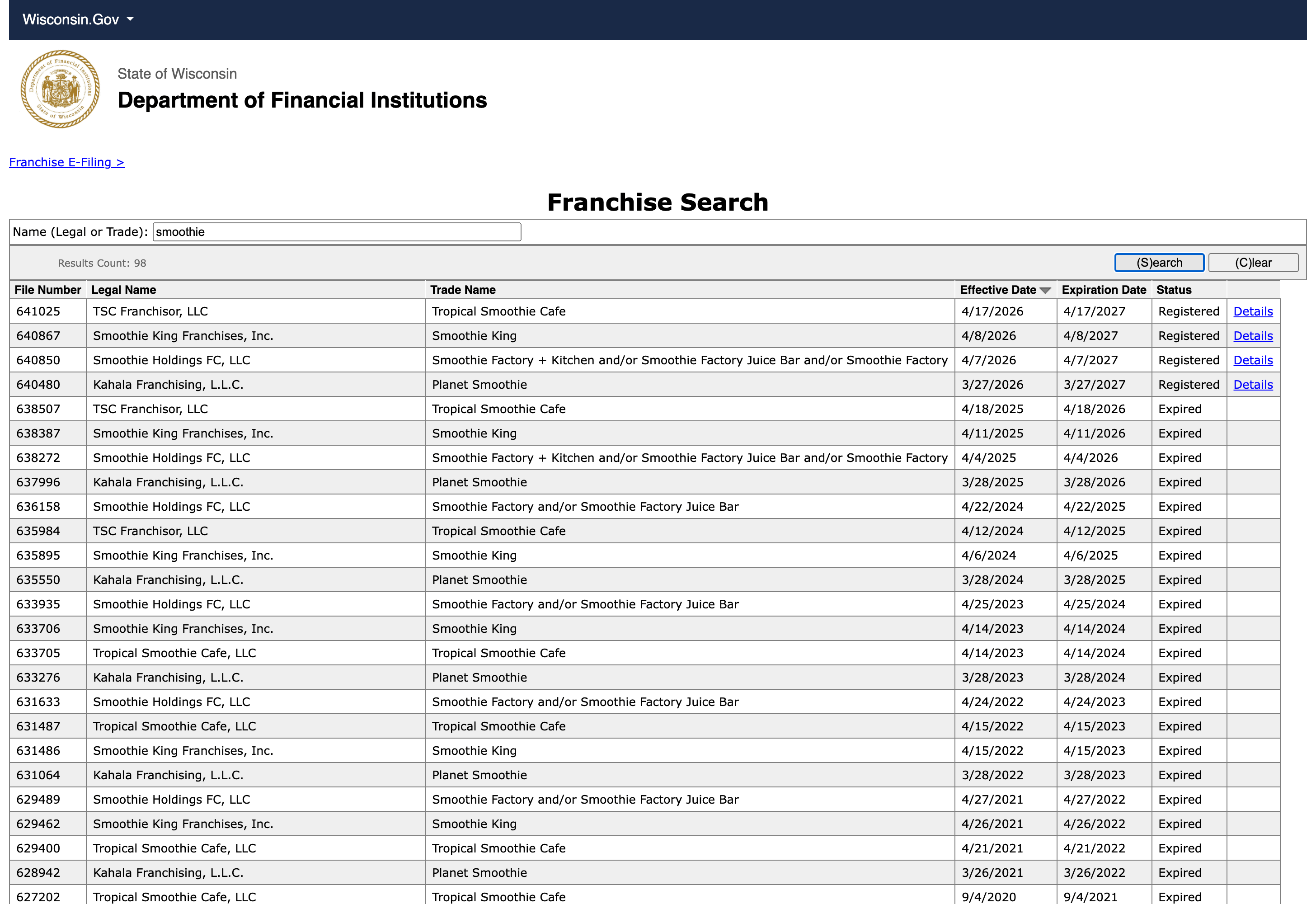
Yes. A Franchise Disclosure Document — the FDD — is a legally required filing. Before a brand can sell you a franchise, it has to register the FDD with state regulators and hand it to prospective buyers. Roughly 14 states run their own registration portals; NASAA's national depository covers the rest. The documents are public records.
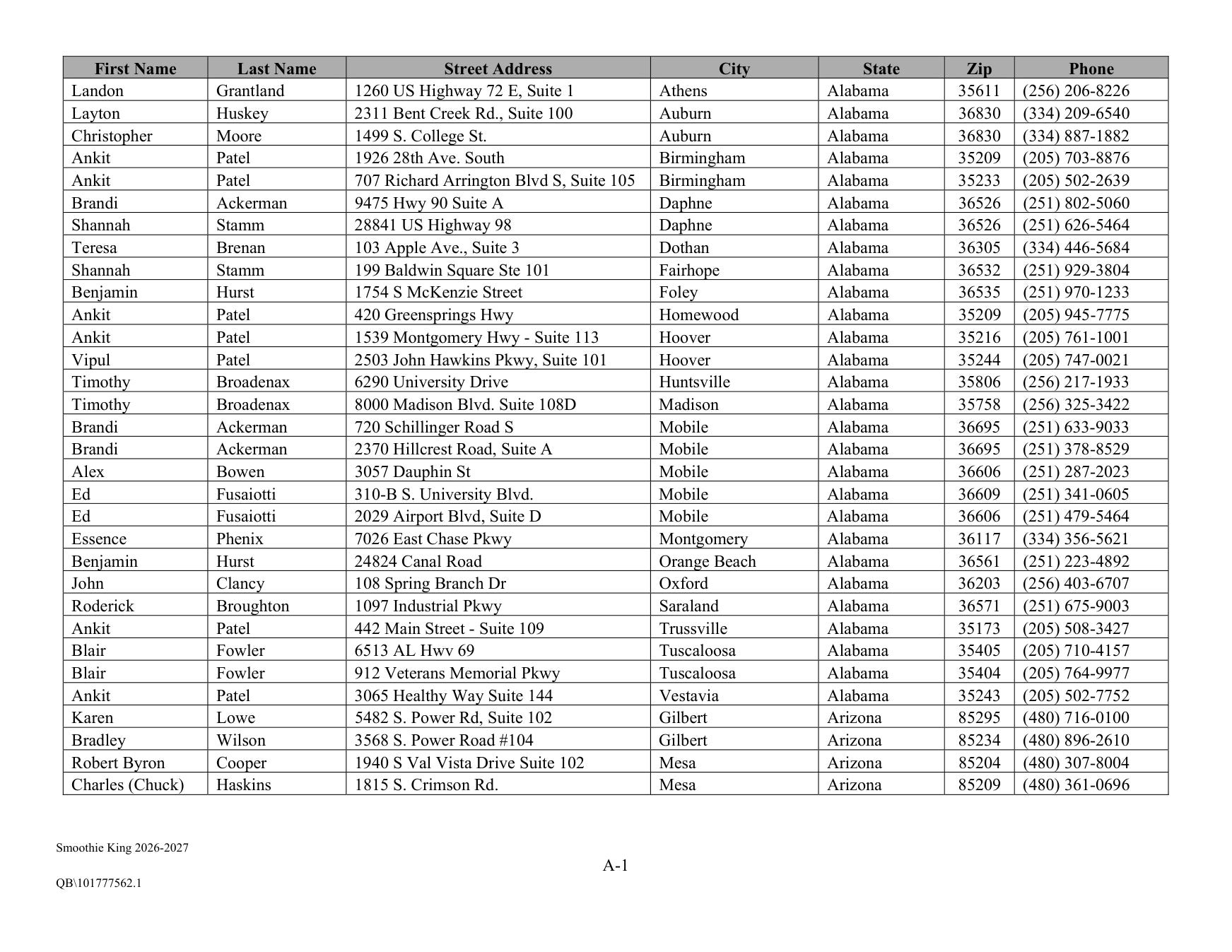
Item 20 is the part that matters here. It lists the brand's current and former franchisees, with contact information. Every franchisee has a phone number on file. The franchisees live in all 50 states, but the paperwork sits in a handful of portals — so coverage is a function of which brands have filed, not which geography you're hunting. Scrape a few free sources and you get operators nationwide.
Can you find out who owns a franchise?
Yes — you read the brand's FDD. One Item 20 is that brand's whole national roster — every operator, in one document. That's the asymmetry: the question feels like a 50-state manhunt, and the answer is a few thousand documents that already exist.
This is what the long tail of franchise searches is really asking. "Who owns the Taco Bell on Main Street." "List of Wendy's franchise owners." At scale, a dataset of 142,579 operators with a phone on nearly every one answers that question by the hundred-thousand. The phone is the universal contact — it's on ~100% of records, because the filing requires it. Owner names are thinner, and I'll show exactly how thin below.
Why is most franchise data wrong?
Because the lists everyone sells are frozen. The largest free archive of FDD text is a 2023 snapshot. Buy a franchisee list from most vendors and you're buying a moment that's two or three years stale — operators who sold, brands that folded, phones that changed.
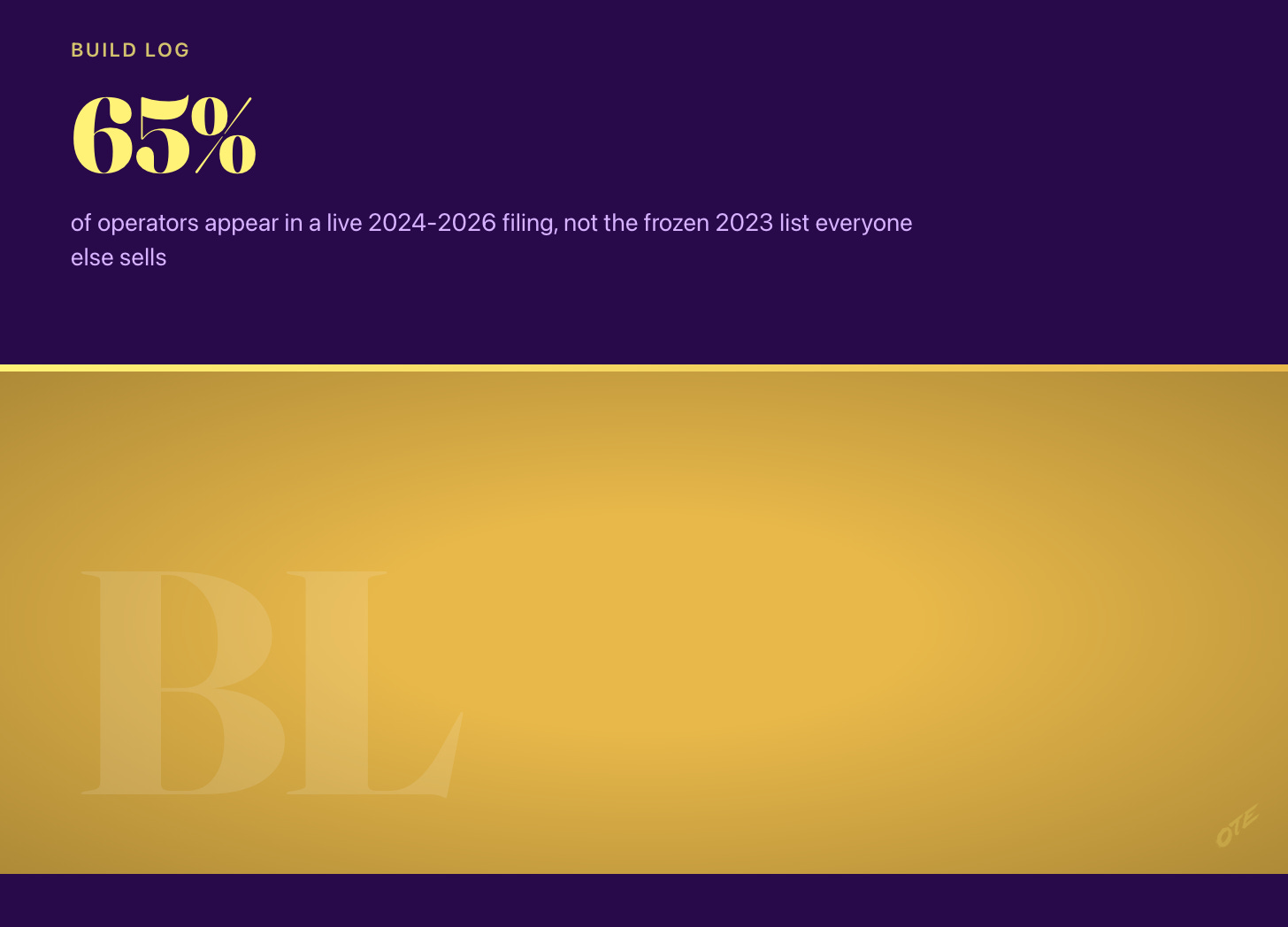
I pulled current filings instead. The national depository and a free public FDD library both publish 2024–2026 documents, and feeding those through the same extractor stamps each operator by the vintage of the filing it came from. 65% of the 142,579 operators show up in a filing from the current cycle, not just the frozen 2023 archive. That freshness is the whole edge: a live operator with a working phone beats a 2023 record every time.
Even my own first cut had a freshness bug, and I'd rather tell you how I caught it than pretend it didn't happen. The extraction mislabeled half the roster as former franchisees — a stray header near the top of a filing was tainting every row beneath it. I ran eleven Claude agents over the source PDFs, page by page, checking the extraction against what each filing actually said. They caught it. The fix cut the mislabeled-former rate from about half to under six percent. Check data like this against the real documents, or you'll ship a number you can't defend.
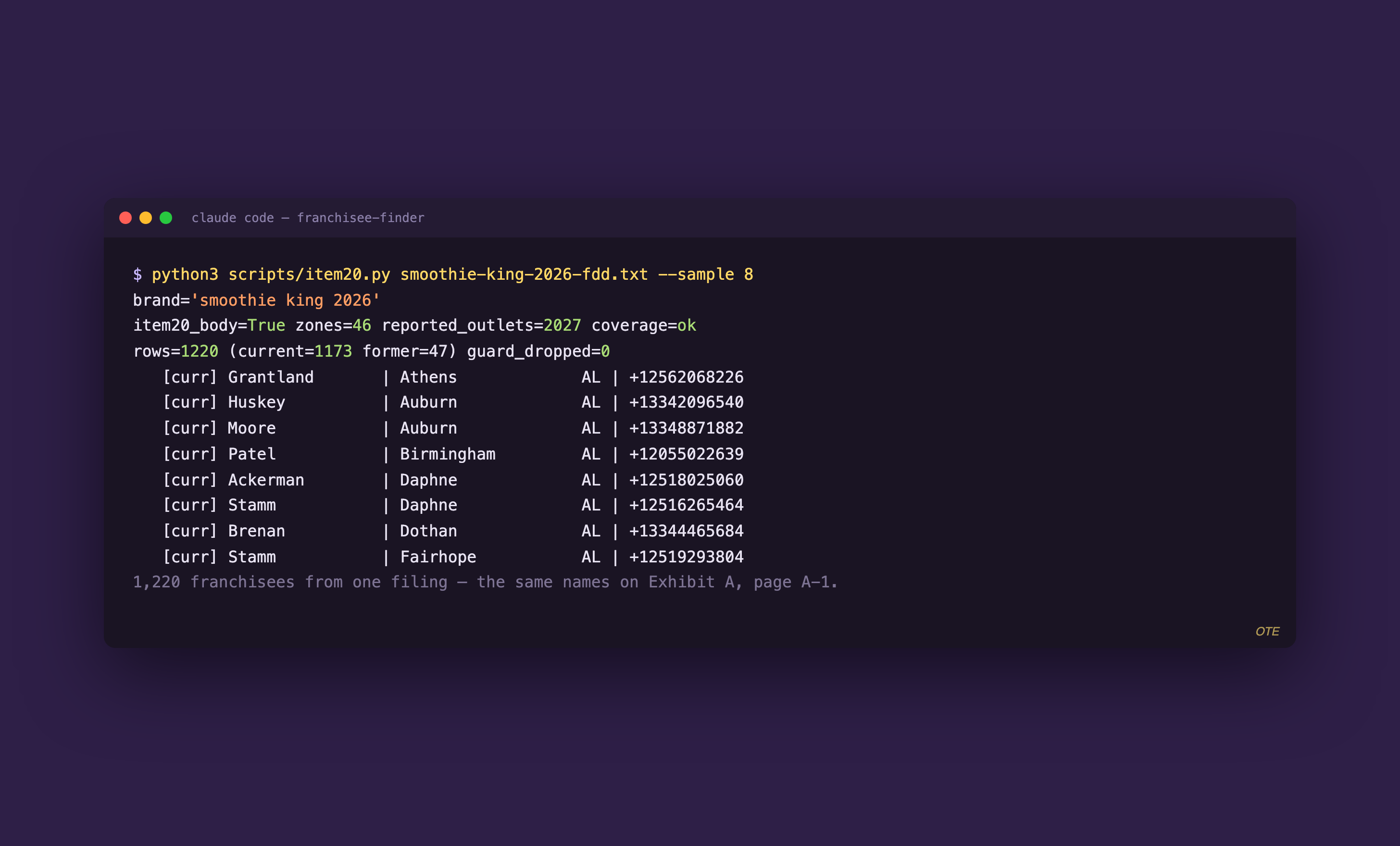
Then I had the finished list audited end to end by an independent pass — roughly 5,800 judged samples, every Texas registry citation re-fetched, every defect re-verified before any fix. It collapsed two phantom duplicate operators, repaired owner names that had been filed in the wrong order, pulled out a batch of business names masquerading as people, and re-keyed the outlets file so all 421,774 of them tie back to a real operator. The numbers here are what survived that pass.
How do you get FDD data without paying FRANdata or ZoomInfo?
You assemble it from free sources, and you pay a vendor for nothing the public record already gives you. Every expensive step in this build has a free substitute:
The documents: a public, MIT-licensed Hugging Face archive of 22,986 already-read FDD texts — more than 1.5 million roster rows once deduped — plus current filings pulled free from the national depository and a public FDD library. No document purchase, no scanning bill.
The contact enrichment: a flat-rate enrichment tool that's unlimited on my plan, run across every operator instead of rationed to the top of the list. Zero marginal cost per lookup.
The store addresses: the Overture Maps open places dataset — 3.9 million US business locations — joined locally to put a street address and map pin on the outlets. The free stand-in for a paid places vendor.
The operating company behind the storefront: data from the SBA's published 7(a) and 504 loan records. Every franchise-coded small-business loan names the borrowing company and its address. 103,411 of them, free, naming the operating entity and address where the web shows nothing.
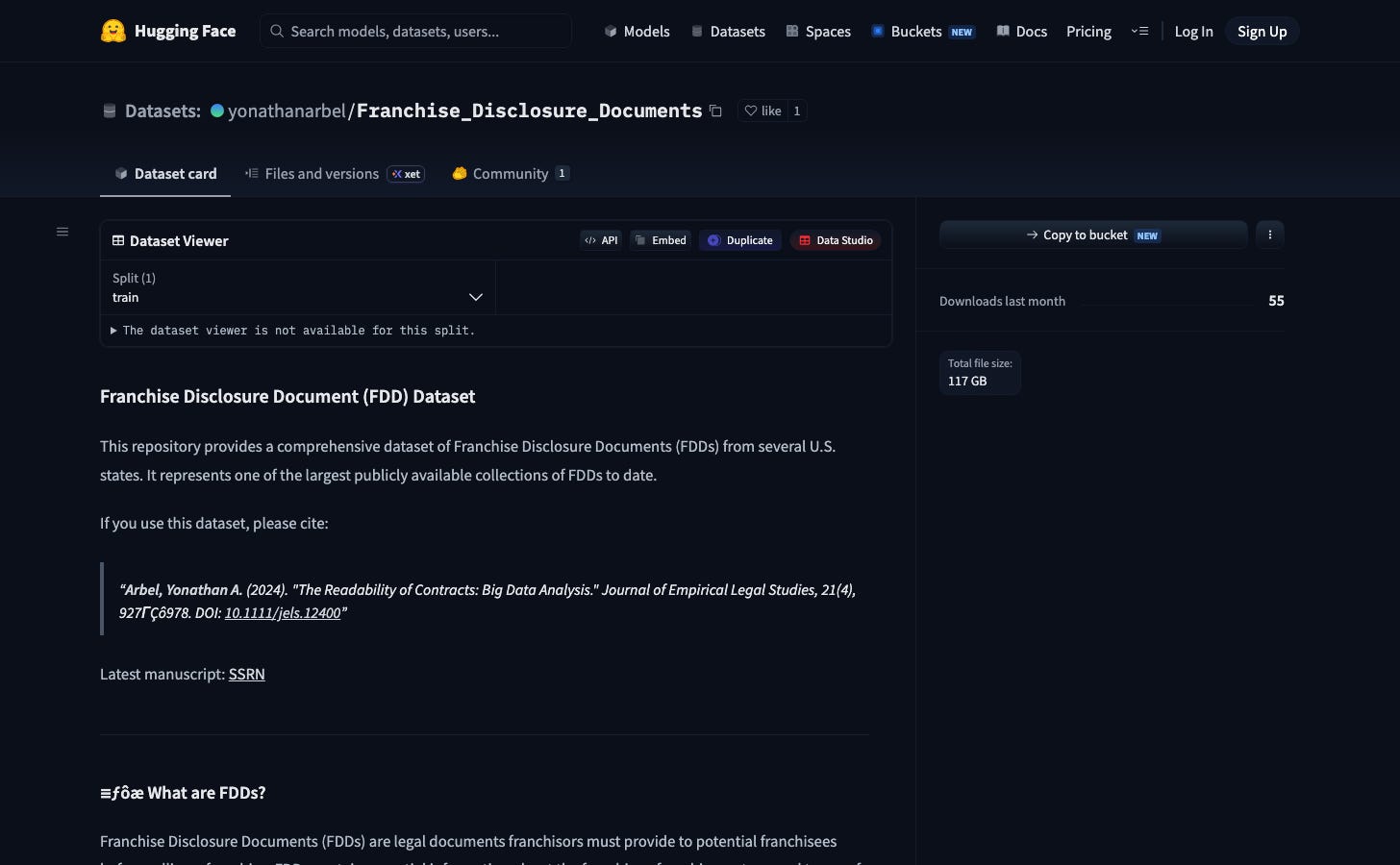
The moat was never the data. It's the assembly — pulling the rosters out and untangling the shells into real operators. You can't buy that, and it's what makes the rest free.
What's actually in the dataset
I'd rather show you the real coverage than sell you a clean story. Some fields are dense. Some are thin, because free public data has a ceiling, and I'd rather you know where it is.
Operators (own 2+ locations): 142,579
Phone (from the filing): ~100%
Confirmed in a current 2026 filing: 65% (93,610)
Named human owner: 16% (22,469)
Operating entity named (SBA company): ~1% (1,603)
Mapped outlets (street + pin): 421,774 outlets, 40% addressed
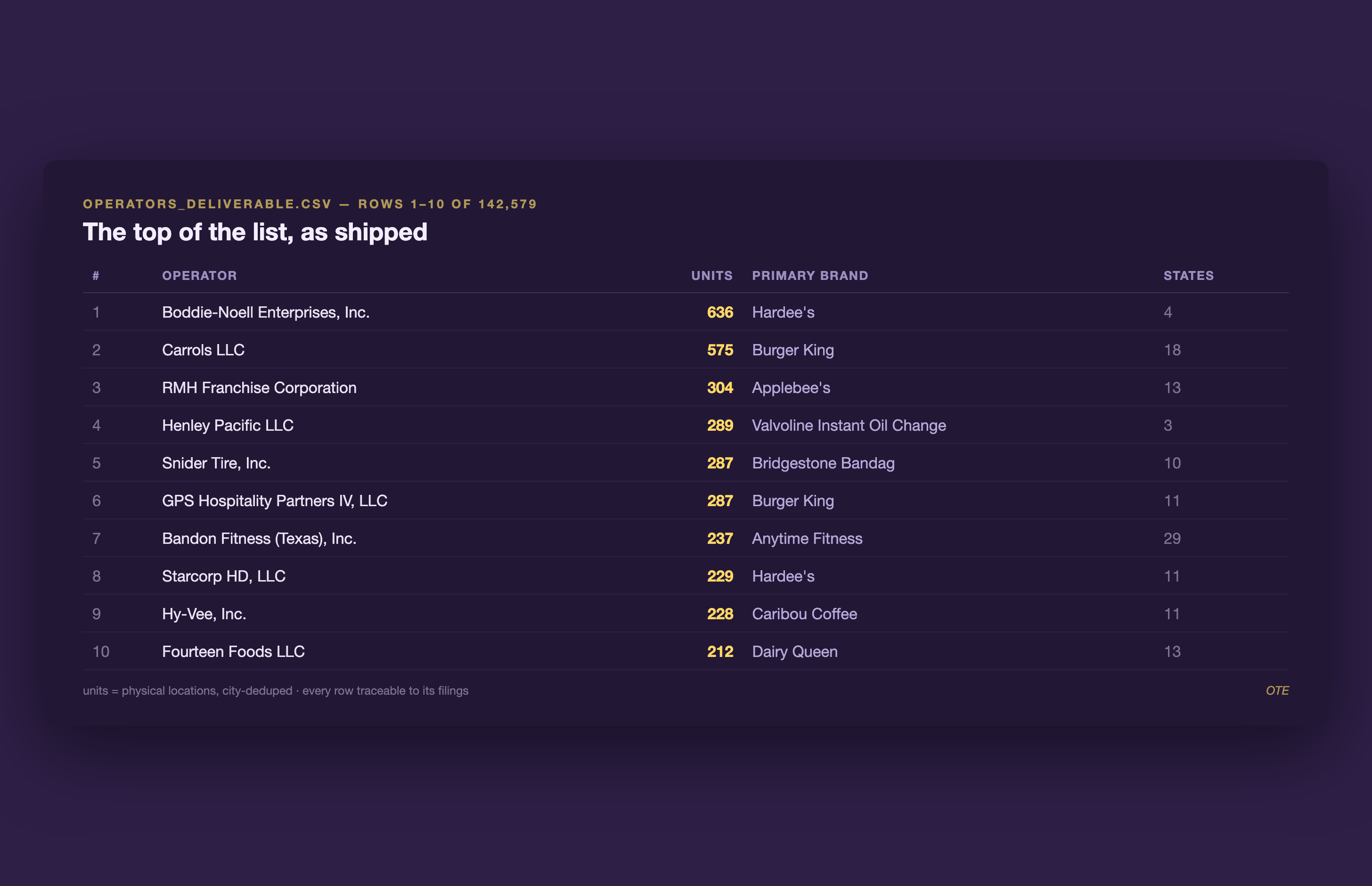
The phone is universal because the filing requires it. The named human owner is the hard ceiling: most franchisees present to the public as the brand storefront, so a phone reverse-looks-up to "Panda Express," not to the operating company behind it. A named human owner sits on 22,469 of the operators — 16% — and I'd rather show you exactly where each one comes from than inflate the number. Three sources, all checkable: on 18,610 the operating entity is itself a person's name, on 2,395 the filing phone reverse-resolved to a named person, and on 1,464 a Texas Secretary-of-State officer record names them. I tried a fourth — matching owners off LinkedIn — and an independent audit found it wrong about half the time, so I cut the whole class. The owners that survived measure at least 95.7% accurate. Naming the rest at scale is a slower, paid job — a Secretary-of-State officer sweep across more states — and it's the next build, not this one.
The operator list is the gold. The phone makes it usable today. The named owners are the bonus where the public record happened to expose them.
Skip the build — download the finished dataset
Everything above is packaged and ready. Annual members pull the full dataset into Claude Code with one command:
142,579 multi-unit operators — the headline list, whale-ranked, a phone on ~100% of records
421,774 mapped outlets — every owned location, street address + map pin where available
22,469 named human owners — each tagged with the public source that named them
1,524,943 raw roster rows — the full Item-20 universe the list was built from
Run /edge data franchisee-finder once your license key arrives — it downloads straight into Claude Code and feeds the tools that act on it (--full adds the raw outlet and roster files).
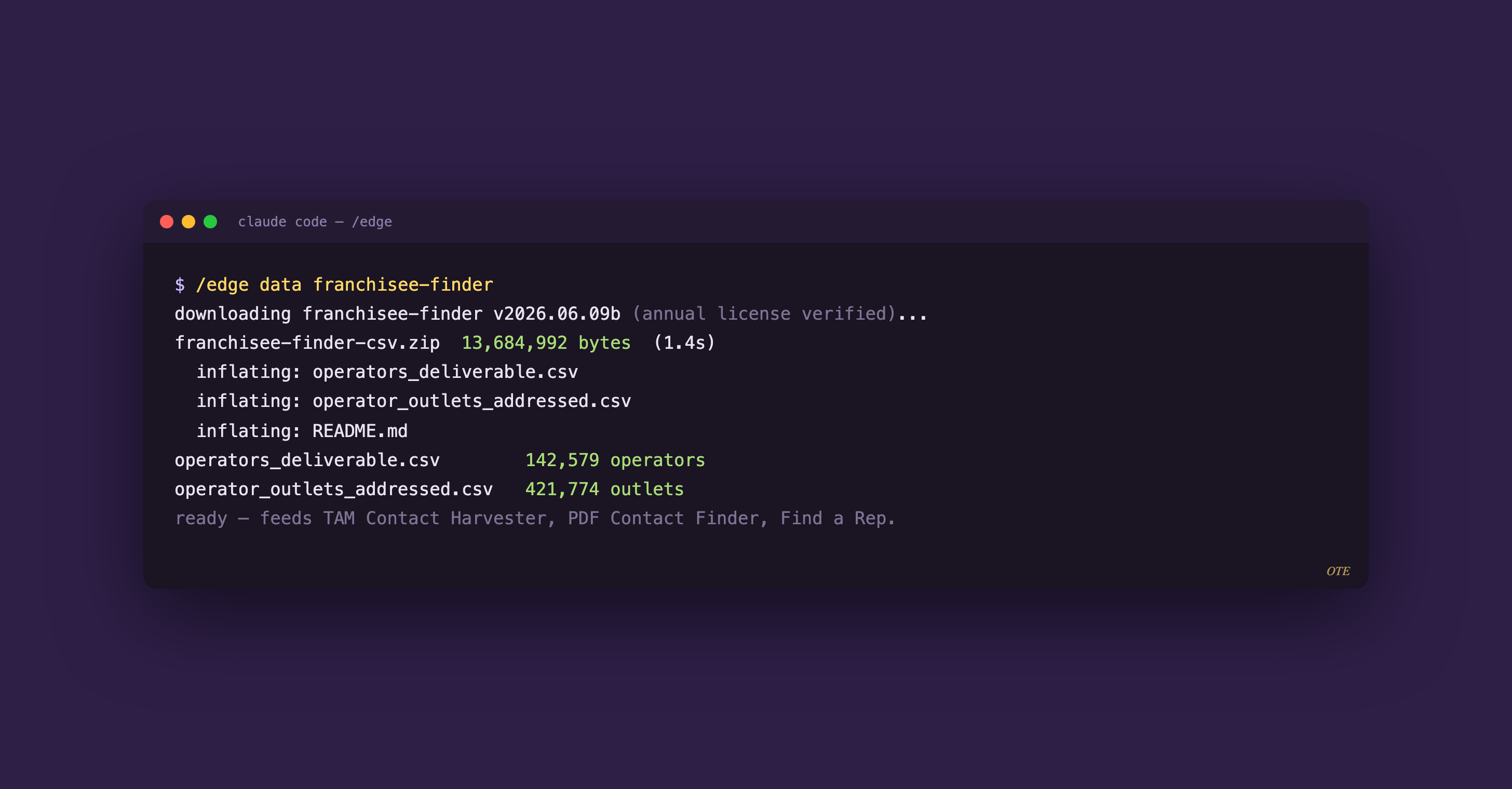
Below is the geeky version. Copy it into Claude Code and rebuild the whole thing yourself.
Or don't. Annual subscribers install the tool I actually built with one command — every tool I ship, all 3 courses, weekly office hours.
→ Go annual — $2,499/yr · Start at $50/mo (most readers start here)