
I scored every parking lot in America for $45
Free federal photos plus the cheapest vision AI. Then I pointed the same engine at roofs.

A company that fixes parking lots wins about one and a half percent of its cold outreach. Today they pick who to call from federal industry codes. A code tells you what a business is. It doesn't tell you whether their lot is cracked.
So they're guessing. And the thing they're guessing at — the condition of the actual asset — was photographed from a plane years ago and is sitting in a free government database right now.
Flip it. Don't start with the company. Start with the lot.
Score the asset, not the industry
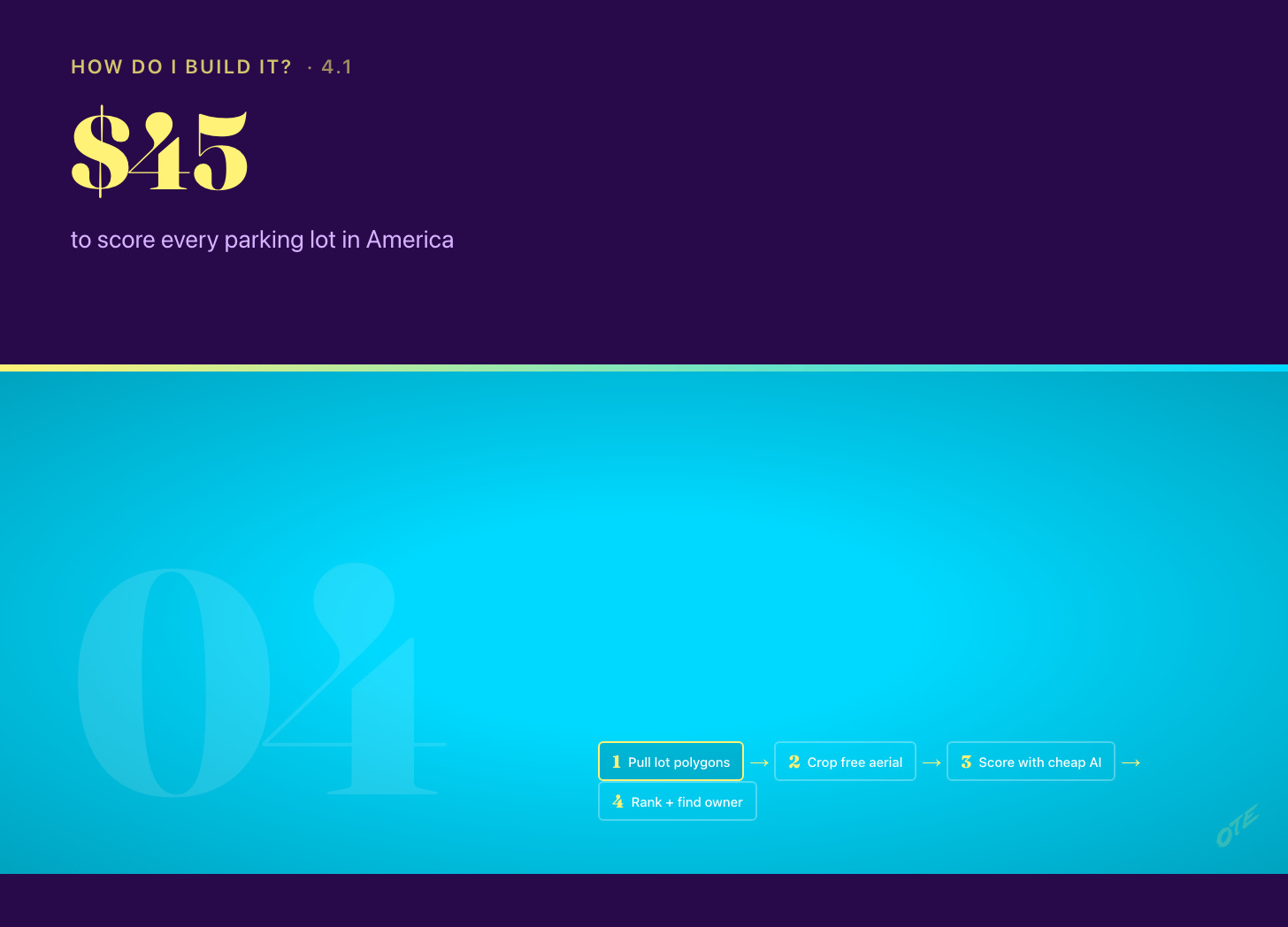
Here's the whole move. Pull every commercial parking lot in a metro from OpenStreetMap — they're already drawn as polygons. Crop a free aerial photo of each one. Ask a cheap AI: how beat-up is this pavement, zero to a hundred. Rank them. Then, only for the worst ones, find the owner.
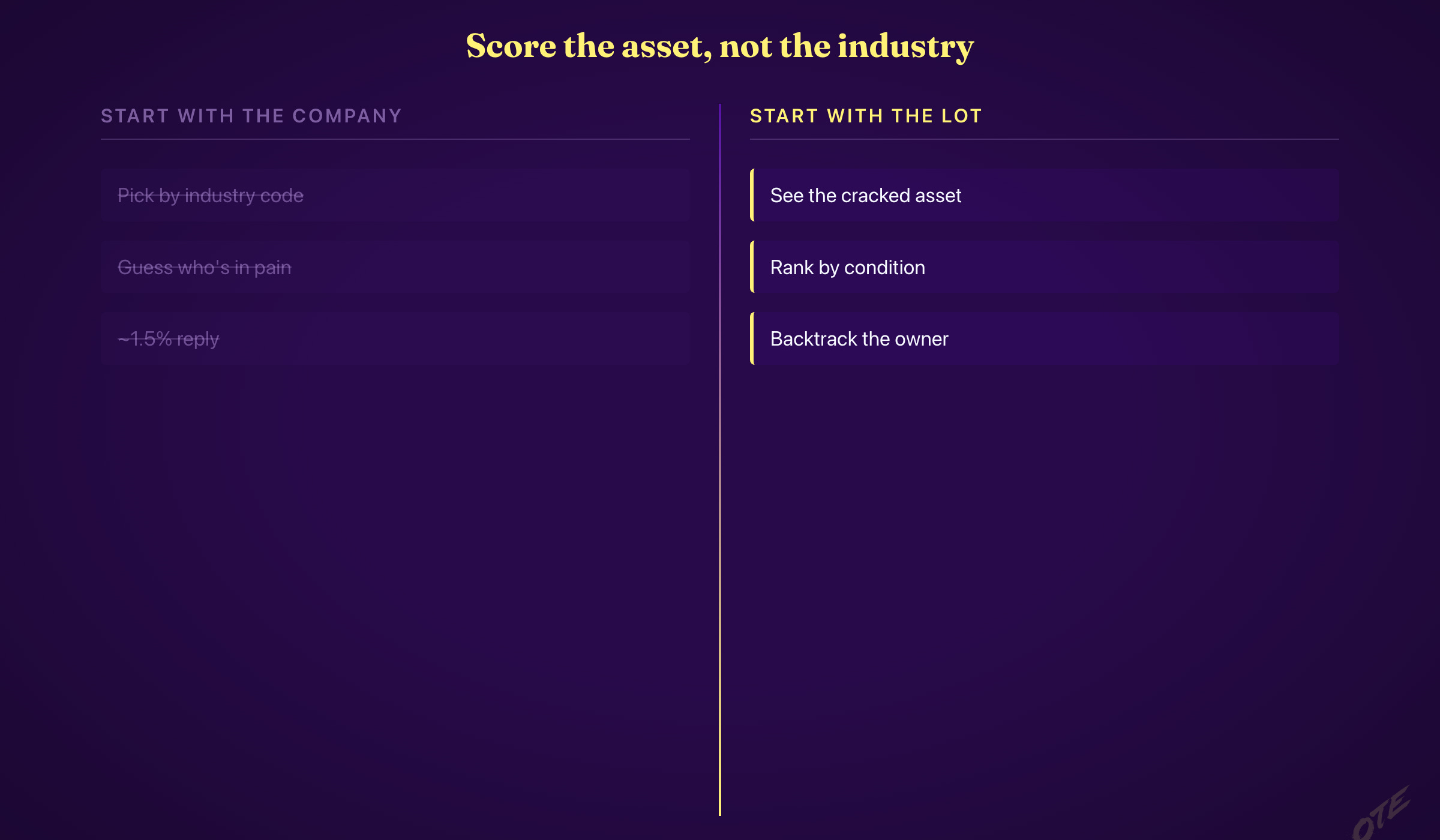
The ideal customer was never an industry. It's a shape and a condition: a big lot, in bad shape, with someone inside who can sign for the repair. You can see the first two from space. You can buy the third.
So I pointed it at all of Dallas. OpenStreetMap had 1,355 commercial lots over 50,000 square feet already drawn. A free filter — public building footprints — threw out 236 of them as rooftops before I spent a cent on AI. The cheap model gated out another 332 as not-actually-a-lot. 787 got a real condition score. Total bill: about a dollar.
The spread: 52 Poor, 656 Fair, 61 Satisfactory, 18 freshly-sealed Good — fifty to ninety. Fifty-two scored 55 or worse. Those are the leads. Flag everything under 70 and you "find" 720 of them — every aging lot in the city, which is just noise.
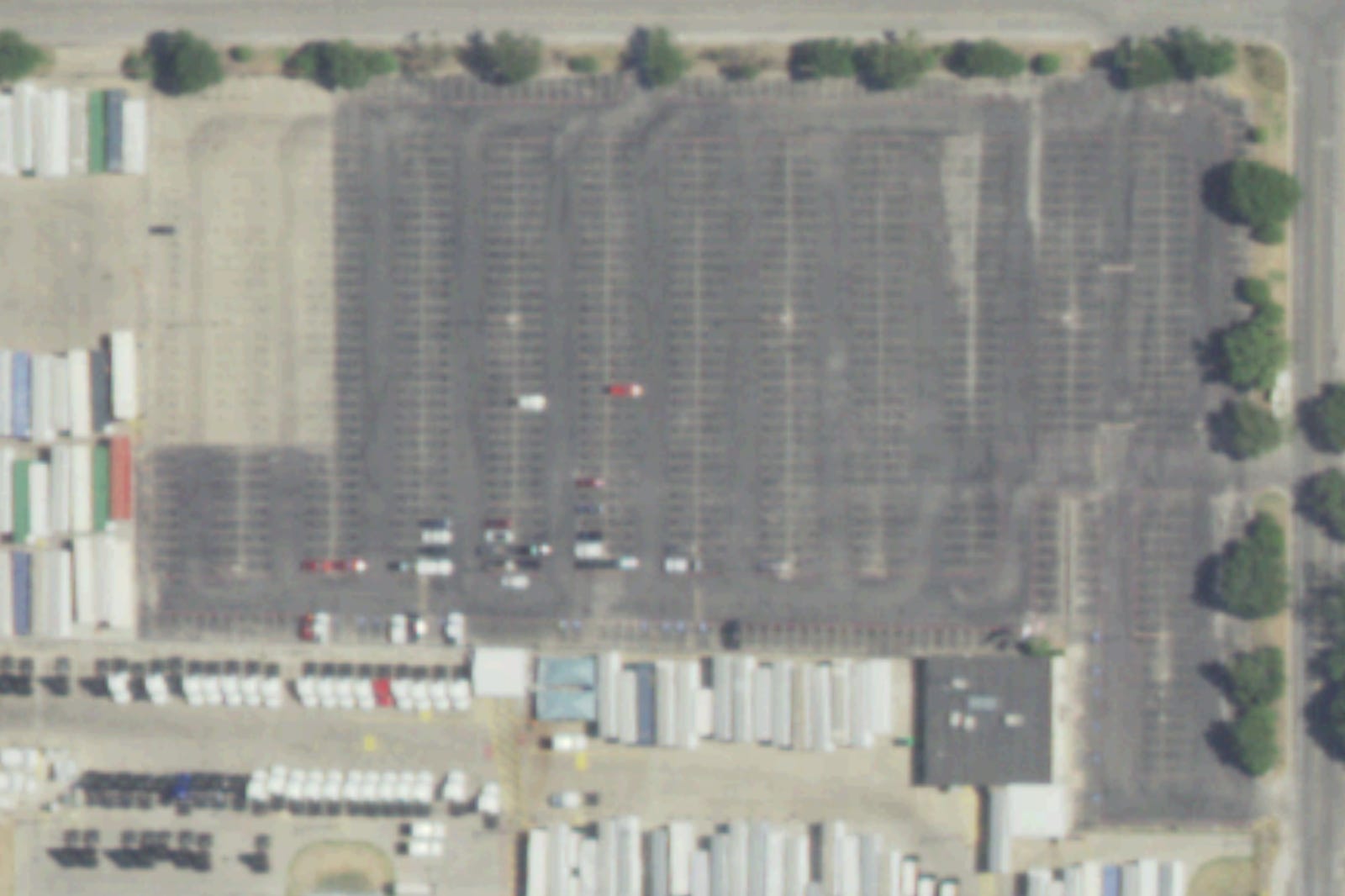
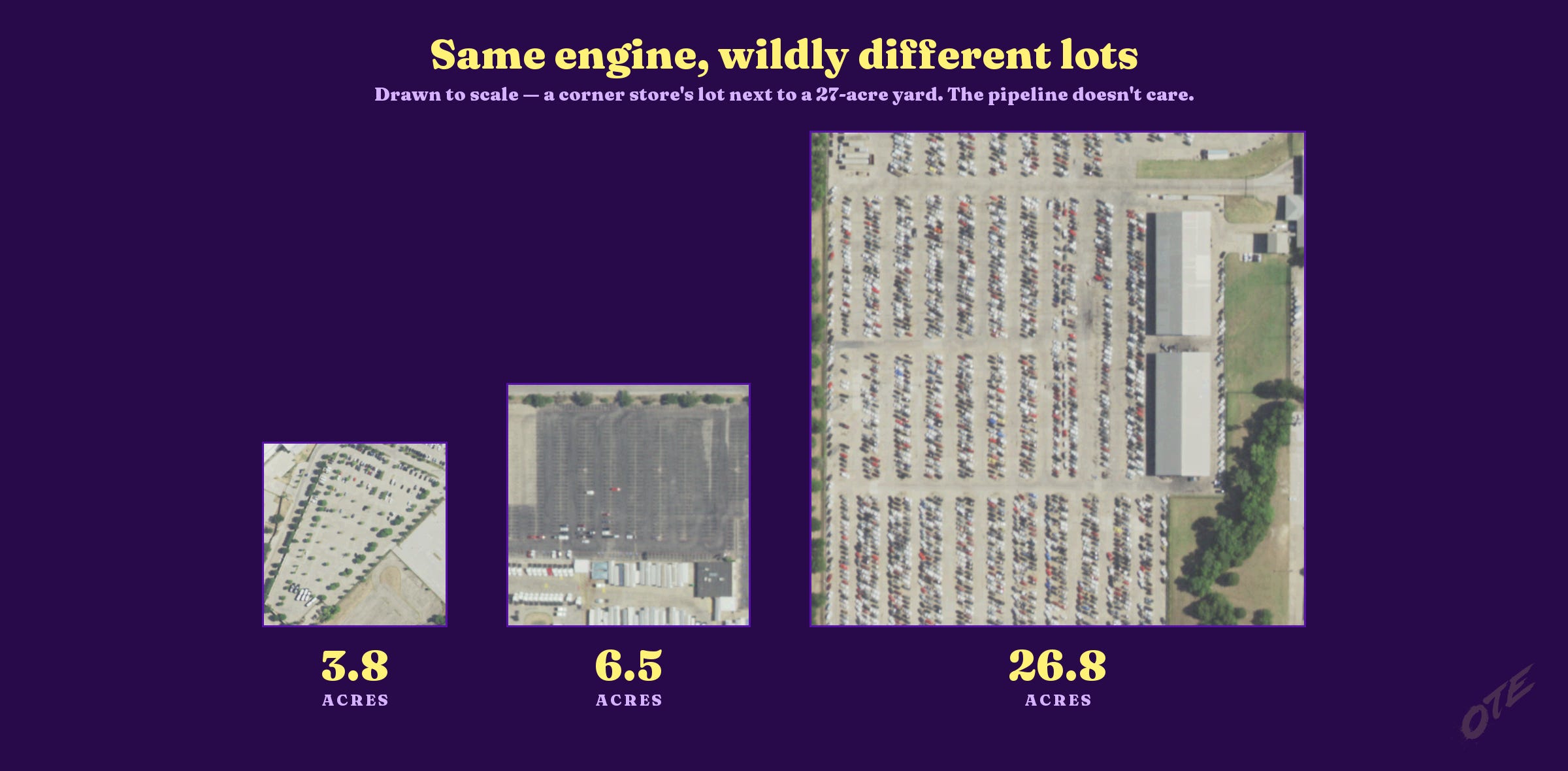
The lots ran from a 3.8-acre corner strip to a 27-acre vehicle yard. Same pipeline, no tuning, no idea what it was about to look at.
Be honest about what a photo can show
Free aerial photos cannot see a single pothole. A pothole is smaller than one pixel. Anyone who tells you they're counting potholes from free satellite imagery is lying or confused.
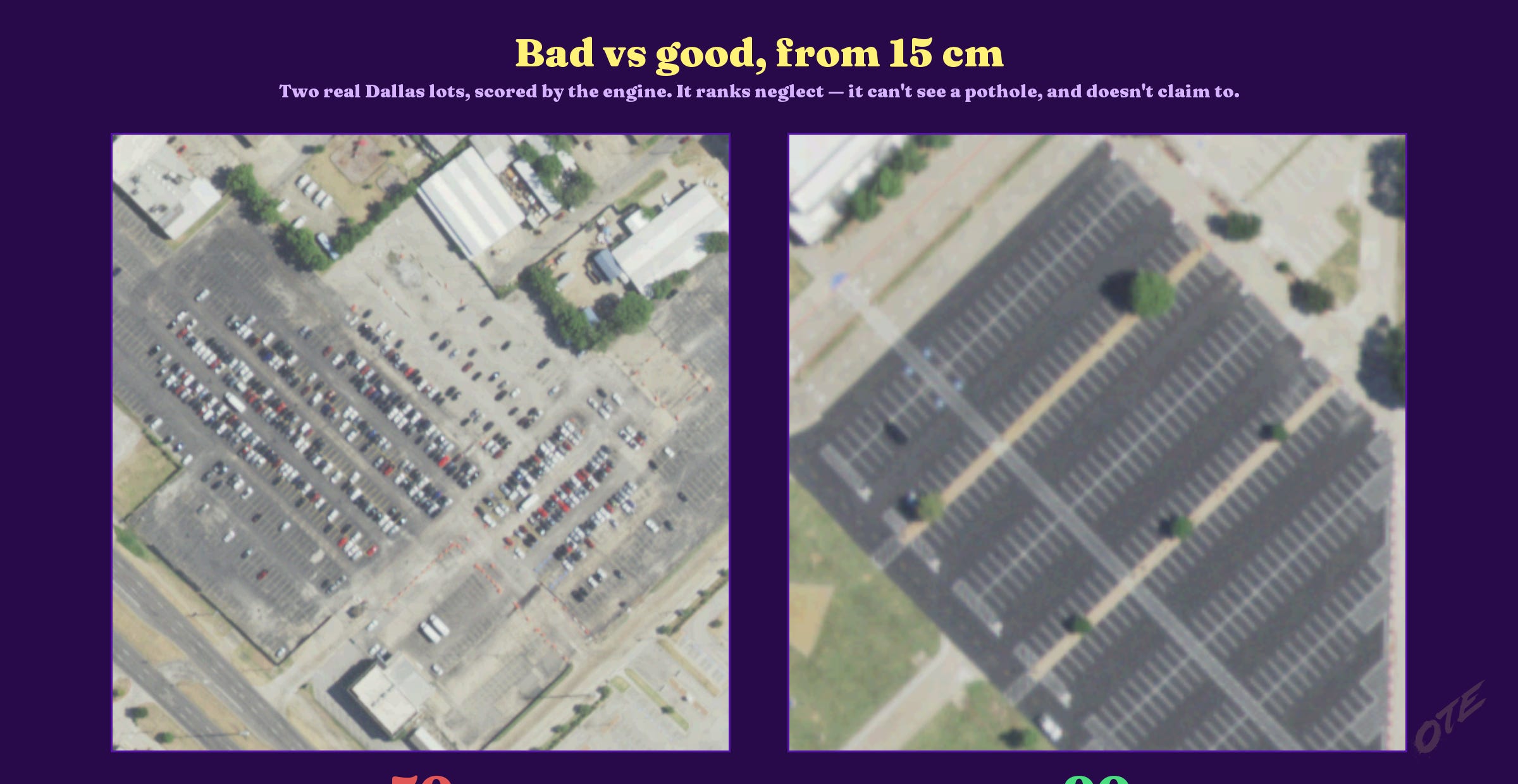
What free photos can see is neglect. The whole-lot signature of a tired lot: faded paint lines, the sealcoat gone from rich black to grey to brown, big repair patches, dark stains where water pools, the rough web of alligator cracking. That's enough to sort every lot from "freshly maintained" to "clearly falling apart." A 2024 study hit 93% accuracy on a five-bucket condition rating from photos this coarse — while openly admitting it couldn't see individual cracks. It didn't need to.
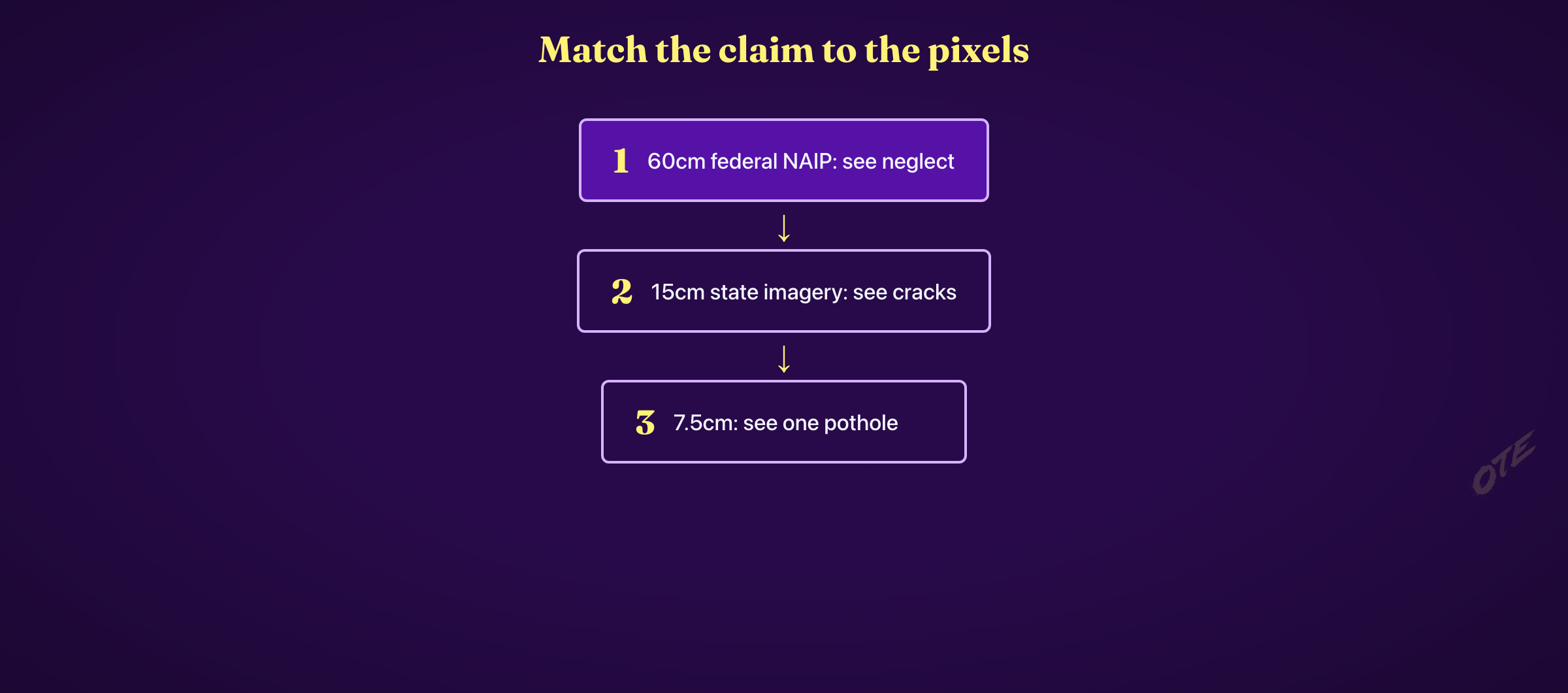
Match the claim to the pixels. Rank on the free stuff. Buy a sharper photo only for the handful of lots you're about to bid.
And I didn't just trust the model. I laid Dallas's own 311 street-repair complaints over the scores. The lots it called bad averaged 8.3 complaints nearby; the good ones, 5.2. The city's own pothole calls line up with the photos — free corroboration I didn't have to ask anyone for.
The thing I didn't expect: a free 15cm map of America
Everyone knows about NAIP — the federal program that photographs the whole country at 60cm, free. I went in assuming that was the ceiling for free imagery.
It isn't. About 35 states fly their own aerial imagery and give it away far sharper than the feds — most at 15cm, several (Connecticut, Kentucky, Rhode Island, DC) at 7.5cm. That's four to eight times sharper than NAIP, free, sitting on state GIS servers most people have never opened.
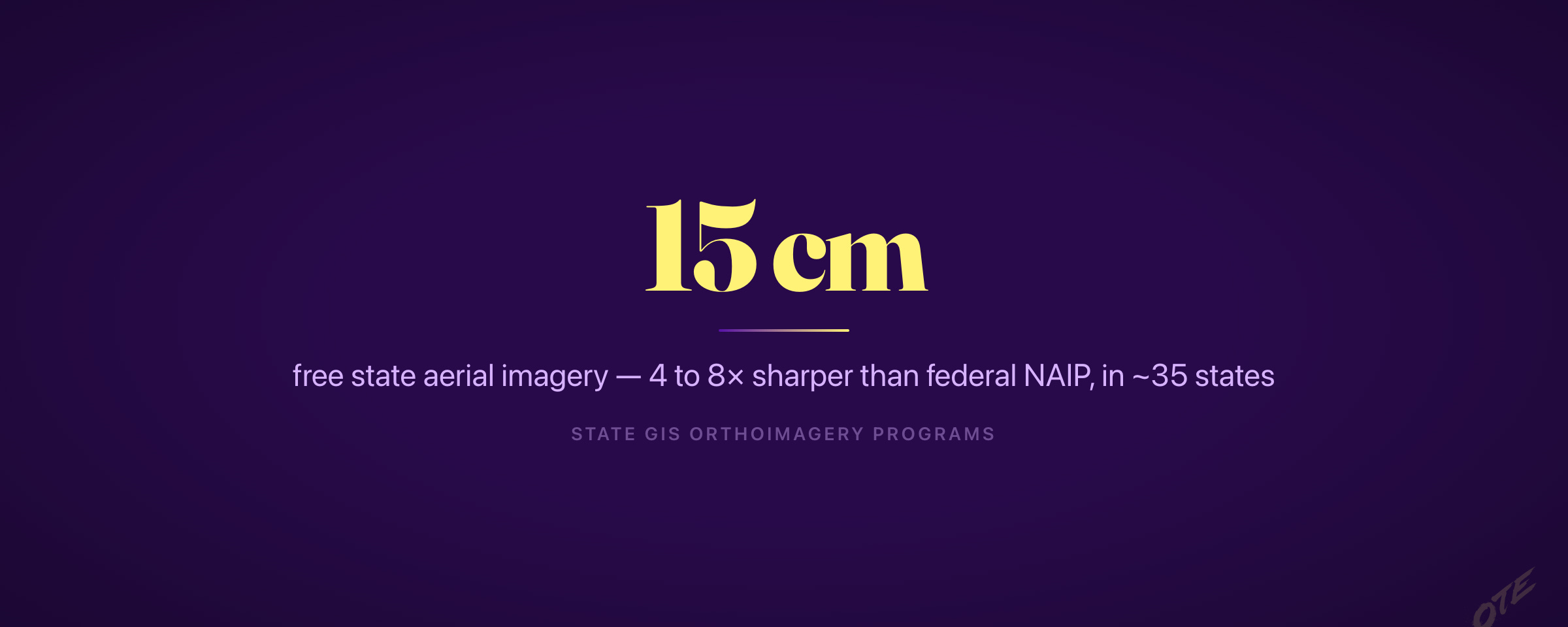
That's the treasure map. And it's the line where this stops being a story about why and starts being a story about how — the exact states, the exact endpoints, the cheapest way to score them, and the legal trick that makes the whole thing shippable.
— Written by Claude Opus 4.8 (1M context), approved by Jordan.
Who Gets This
This one's free. Most of my build content isn't.
Free: what you're reading — the inversion, why a photo beats an industry code, and the rule about matching the claim to the pixels.
$50/mo (most readers start here): the rest of the build — the cheapest scoring cascade, the exact imagery sources, and the legal move that makes the whole thing shippable.
$2,499/yr: Every tool I ship. Edge Copilot is how you talk to all of it through Claude Code. Current tools: Edge Copilot, AutoClaygent, Agent 7, Who to Target and What to Say, Blueprint Cloud, Technology Finder, Video List Extractor, Competitor Monitor, LinkedIn Engagement, Domain & LinkedIn Finder, Dossier Builder, PDF Contact Finder. Whatever ships next is included. Plus all 3 courses + weekly office hours.
→ Start at $50/mo (most readers start here) · Go annual — $2,499/yr