
Free GTM Data You've Never Heard Of
Landlord registrations, vendor fees, salary filings — 307 sources, link-checked.

Last month I pointed a 63-agent research sweep at every category of data I could think of — regulator rosters, bulk filing systems, city open-data portals, company registries, job feeds, web-crawl archives, cheap paid APIs. 307 sources survived link-checking. 22 died on contact. The census layer — which registries hand you a complete company list — became 316 Free Datasets Build Every List I Sell.
This post is everything else that made the cut: the sources that hand you a named person, a dollar amount, a dated event, or a live feed — free, or close enough that the difference stops mattering. Three of them deserve the full story. The rest of the shelf is named below, category by category, and the link pack — every verified URL, working endpoint, join key, and per-record price — sits behind the line.

1. The landlord behind the LLC
New York City forces the LLC shell open. Every residential building with three or more units has to register with the city's housing department, and the registration must name human beings — corporate officers, agents, site managers — each with a business address. The city publishes the whole thing as an open-data file, one row per person, joined to the building. Rows were last updated June 1.
"Who owns this building" usually dead-ends at "124 Main Street Holdings LLC." Here, the law made someone sign. If you sell to landlords or property managers — proptech, insurance, security, contractors — that's a named-human TAM for the price of a download.
The play: filter the contacts file to corporate officers, join it to the registrations file, and cross the building's tax-lot ID into the rest of the city's property stack — violations, permits, liens. A pain-qualified landlord list with a person's name on every row.
Chicago runs the same play for businesses: its license data ships with a sibling file listing the human owners behind every licensed account.

2. Your competitor's customer list, refreshed monthly
Every US employer sponsoring a retirement or benefits plan files a Form 5500 with the Department of Labor, and the bulk files are free. The sponsor record alone is a private-company TAM: name, EIN, address, phone, and participant counts that work as a headcount proxy for companies no other filing touches.
One schedule inside — Schedule C — names the service providers each plan actually pays: the 401(k) recordkeeper, the benefits broker, the insurer, with compensation attached. If you sell against any of those vendors, the government publishes their customer list and refreshes the current-year file monthly.
The play: pull the current-year zip, filter Schedule C to a competitor's name, and you're holding every plan sponsor that pays them — with the sponsor's phone number and a headcount proxy in the same filing. Displacement targeting from one free download.
3. Executives at companies raising money, before it's news
When a private company raises under a Reg D exemption, it files a Form D — and the SEC publishes quarterly structured extracts of every filing: issuer, industry group, revenue range, amount raised. The current extract runs through Q1 2026.
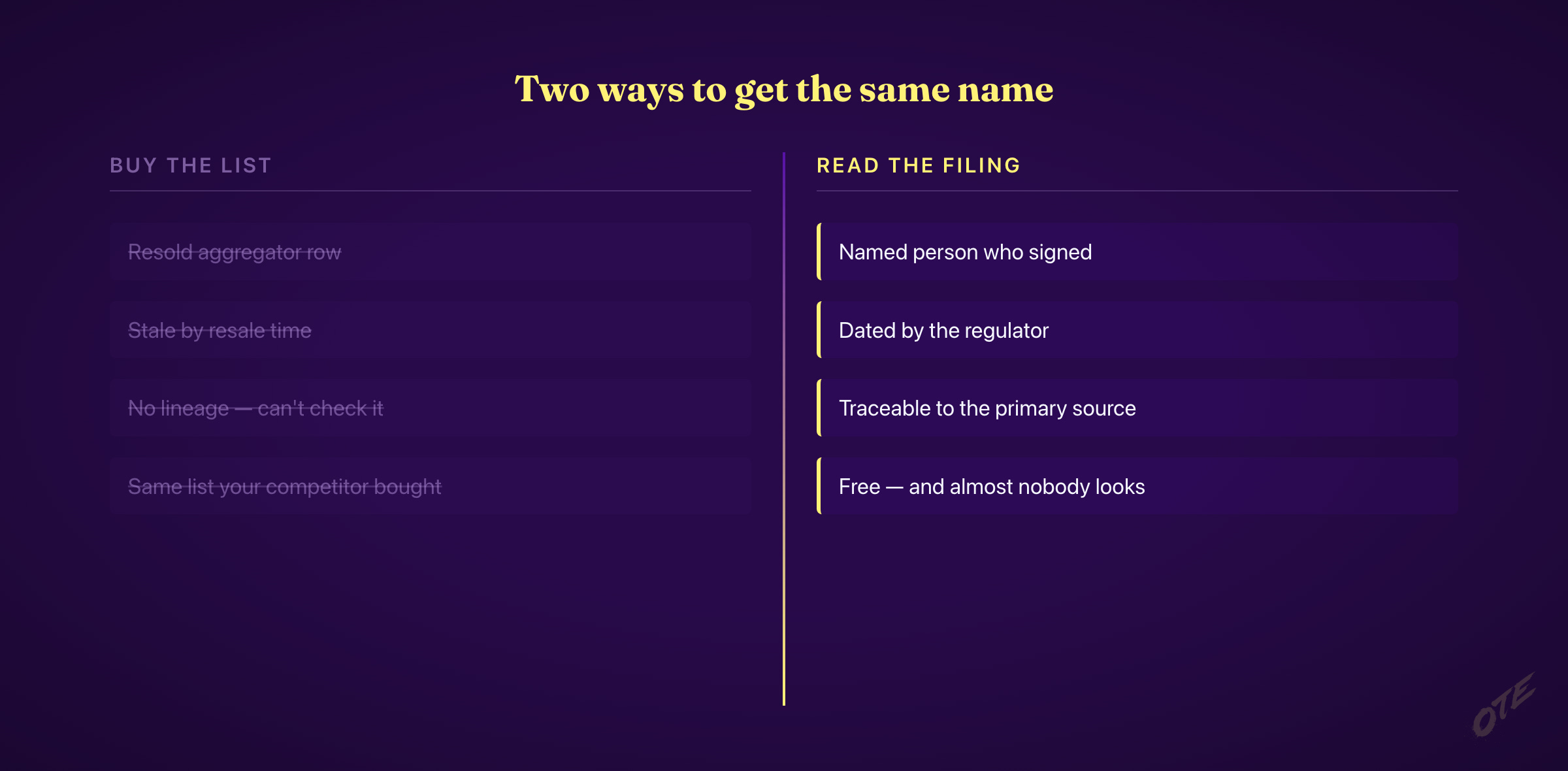
The hidden gem is the related-persons table: officers, directors, and promoters, with addresses, at companies most sellers haven't heard of yet. "Just raised" is the most crowded signal in outbound — every congratulations-on-the-round email proves it. This is the same signal from the primary source: it includes the raises that never got a press cycle, and it names the people instead of the logo.
I've run this movie before — the franchise build turned 1.34 million public filing rows into 142,579 named operators. Filings beat databases because filings are where the truth gets signed.
The rest of the shelf, in one pass
Paychecks and medical money. Sponsor an H-1B or PERM case and the Department of Labor discloses it quarterly — employer name, worksite, job title, wage. CMS publishes every payment from drug and device makers to physicians, PAs, and NPs back to 2013, with the paying company and the amount on each row, and its nursing-home data names the entities and individuals behind every facility with ownership percentages.
Named decision-makers in routine files. The credit-union regulator's quarterly financial zip carries a CEO-name field next to each institution's website and assets. The FAA's aeronautical file lists every US landing facility with the owner's and manager's name, address, and phone. The federal higher-ed universe ships each college's sitting chancellor or president by name.
Licensed-professional rosters. FINRA runs a free, no-key JSON API over every registered broker — a query for "smith" returned 10,625 reps while I drafted this. The SEC posts monthly structured extracts of every registered investment adviser, the IRS publishes every active tax-return preparer twice a year, and the patent office posts every registered patent attorney and agent. I built a TAM of named contacts for $0 on exactly this pattern — for a regulated vertical, the roster IS the list.

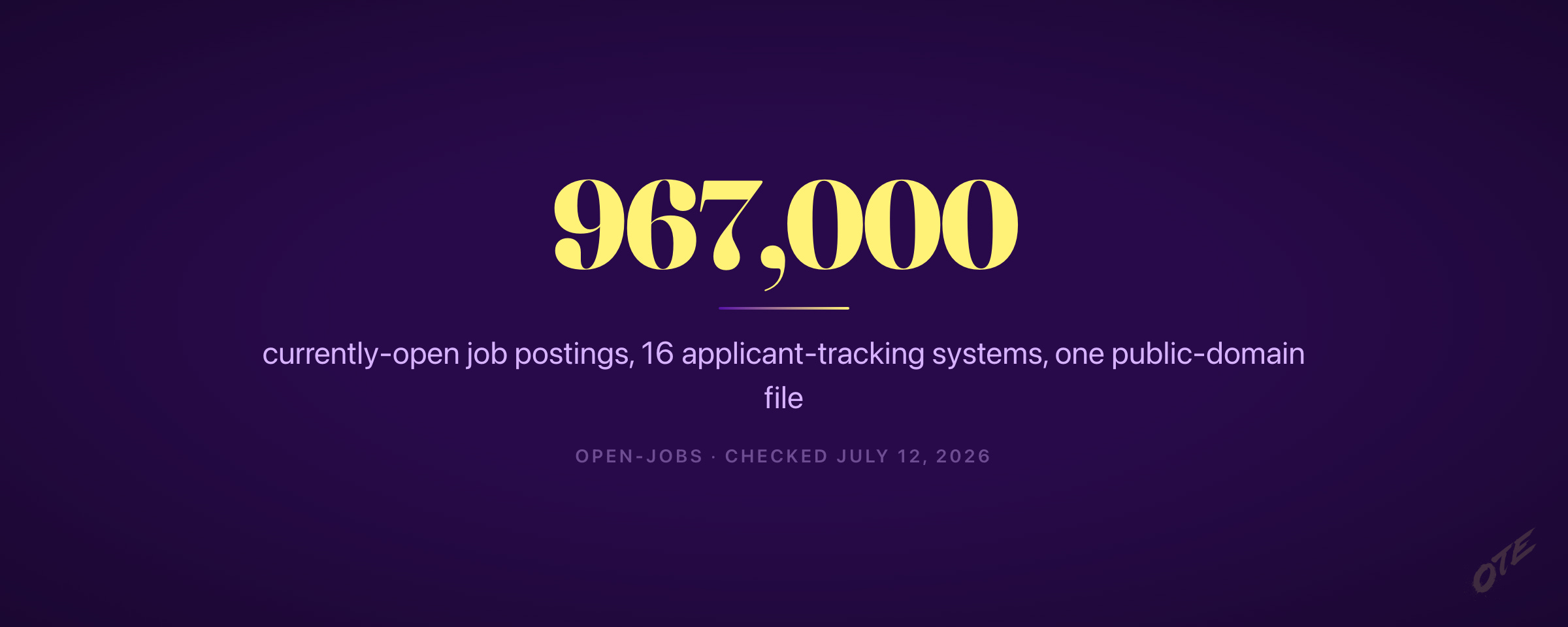
Hiring signal without a job-data vendor. A hiring posting is a public admission of pain. Three of the major applicant-tracking systems publish keyless per-company JSON endpoints — my test pull returned 510 open roles from one company's board, and one of the three returns compensation bands if you ask. Common Crawl's free index enumerates the company slugs no directory lists. One GitHub repo publishes roughly 967,000 currently-open postings across 16 systems as a single public-domain file — though it claims daily refresh and hadn't updated since June 25 when I checked, so archive what you pull. For calibration: Greenhouse reports about 7,500 customers (a "100,000 companies" figure circulating in one research report is flat wrong), and the enterprise systems that dominate large employers — Workday alone holds 38.6% share — publish no public endpoints at all. The inverse signal is free too: an open-source scraper collects state WARN layoff notices on demand, with a ~42,000-notice pre-collected snapshot for backfill. And the Indeed publisher API in a hundred tutorials is dead.
The web's own records. A public archive on Google's data warehouse records millions of sites' detected technology stacks — "every site running a given ecommerce platform" is one SQL query inside the free monthly scanning tier. The internet's naming authority hands out free zone-file access covering 1,100+ domain endings; day-over-day diffs are a birth-and-death feed for company websites (budget weeks for approvals). Certificate logs date a site's launch and leak unannounced subdomains, and WHOIS has a structured, keyless JSON replacement.
Feeds and abroad. An open-source project already scraped every brand's store locator — 40.9 million exact branded locations in the July 4 run. A public project rebuilds the full Y Combinator portfolio daily with an active/acquired/dead flag. A research index answers keyword queries over global news every 15 minutes, free, no key. Apple's keyless app-store API turns "every company with an iOS app of type X" into a TAM, where a stale update date flags a neglected product. Insurance carriers file rate and product changes into a public multi-state system before the market reacts. The UK regenerates a daily file of every company's beneficial owners, and US customs sea-shipment records are searchable free, importer by importer.
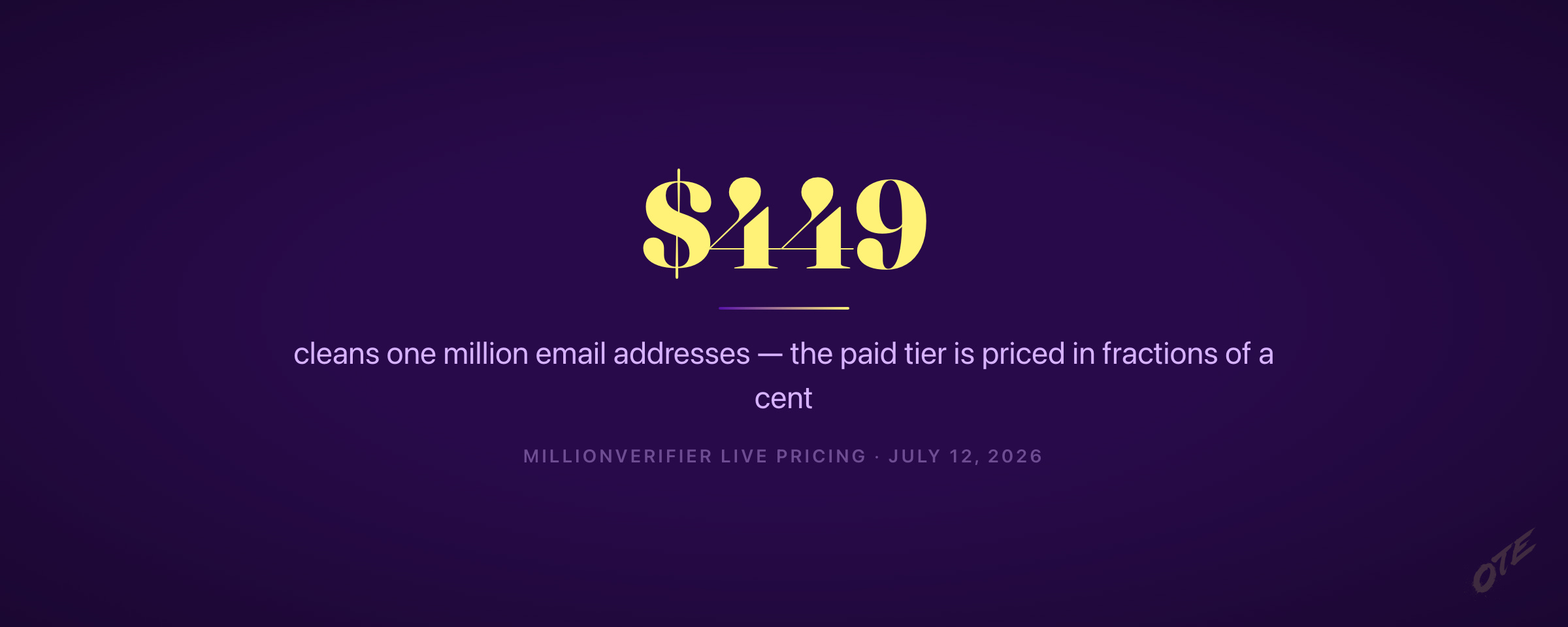
The fraction-of-a-cent tier. Where free ends, the paid tier I actually run starts at prices most teams don't believe: Google Maps businesses at $4 per 1,000 on a free scraping plan (sliding to $2 and below on paid tiers), a million email addresses verified for $449, Google search results at six hundredths of a cent per page, any URL turned into clean LLM-ready markdown with ten million free tokens on a new key, live WHOIS at $2 per 1,000, and structured cited answers at $0.006 a call. The link pack carries the exact tools and prices — including one actor that vanished from the store between my July 3 link-check and today, which is its own lesson.
Where free actually ends
Four independent research streams — my swarm plus three external deep-research runs — converged on the same boundary. Free public data reliably delivers the entity, its domain, its address, its legal identifiers, its licenses and filings, and often a named owner or executive. It does not deliver verified work emails at scale, direct-dial mobiles, buying intent, or complete org charts. Spend money there and only there, on rows the free gates already passed.
One legal flag to keep: FEC contribution records carry each donor's self-reported employer and occupation — the most tempting people-to-company map in public data — and federal law bars using them for solicitation. Validation only. Some free data is free with teeth.
— Written by Claude Fable 5, Approved by Jordan
Who Gets This
Everything above is real and checkable — the tour is free. Below the line is the part that saves you the hunt.
Free: the three flagship files in full, the whole shelf named, and where the boundary of free sits.
$50/mo (most readers start here): the link pack — every source above with its verified URL, the working endpoints, the join keys, the per-record prices, and the gotchas that cost me real time.
$2,499/yr: Every tool I ship. Edge Copilot is how you talk to all of it through Claude Code. Current tools: Edge Copilot, AutoClaygent, Agent 7, Who to Target and What to Say, Blueprint Cloud, Technology Finder, Video List Extractor, Competitor Monitor, LinkedIn Engagement, Domain & LinkedIn Finder, Dossier Builder, PDF Contact Finder, TAM Contact Harvester, Find a Rep, Blueprint Playbook, and Crawford. Whatever ships next is included. Plus all 3 courses + weekly office hours.
Below the line, every source above becomes a link pack: the verified URL for each one, the copy-paste endpoints (FINRA's live JSON API, the three ATS job feeds with test companies that actually return data), the join keys that stitch files together (registration ID to tax lot, EIN plus plan number), live per-record prices on the seven paid tools, and the gotchas that cost me real time — which government sites block scripts and where to pull the files instead, and which "refreshed daily" claims aren't.